
Part 3: CCRA & CC in the Classroom

What can we learn from a study of these two little words?
Let’s take a look at some data together.
From 2015 to 2018, the project LEONIDE collected 2,500 essays written by middle school students.
Meanwhile, in 2016–2017, an ethnographic study observed over 400 hours of high school classes (Leone-Pizzighella, 2021).
In 2021–2022, the project ITACA collected 635 essays written by high school students.
In 2024, based on 300 hours of classroom observations at middle schools in the STEMCo program, these data helped us understand how a micro-detail in students’ language relates to a macro-process: school socialization.
By analyzing the various textual and ethnographic data through the lens of the CCRA, we found that:
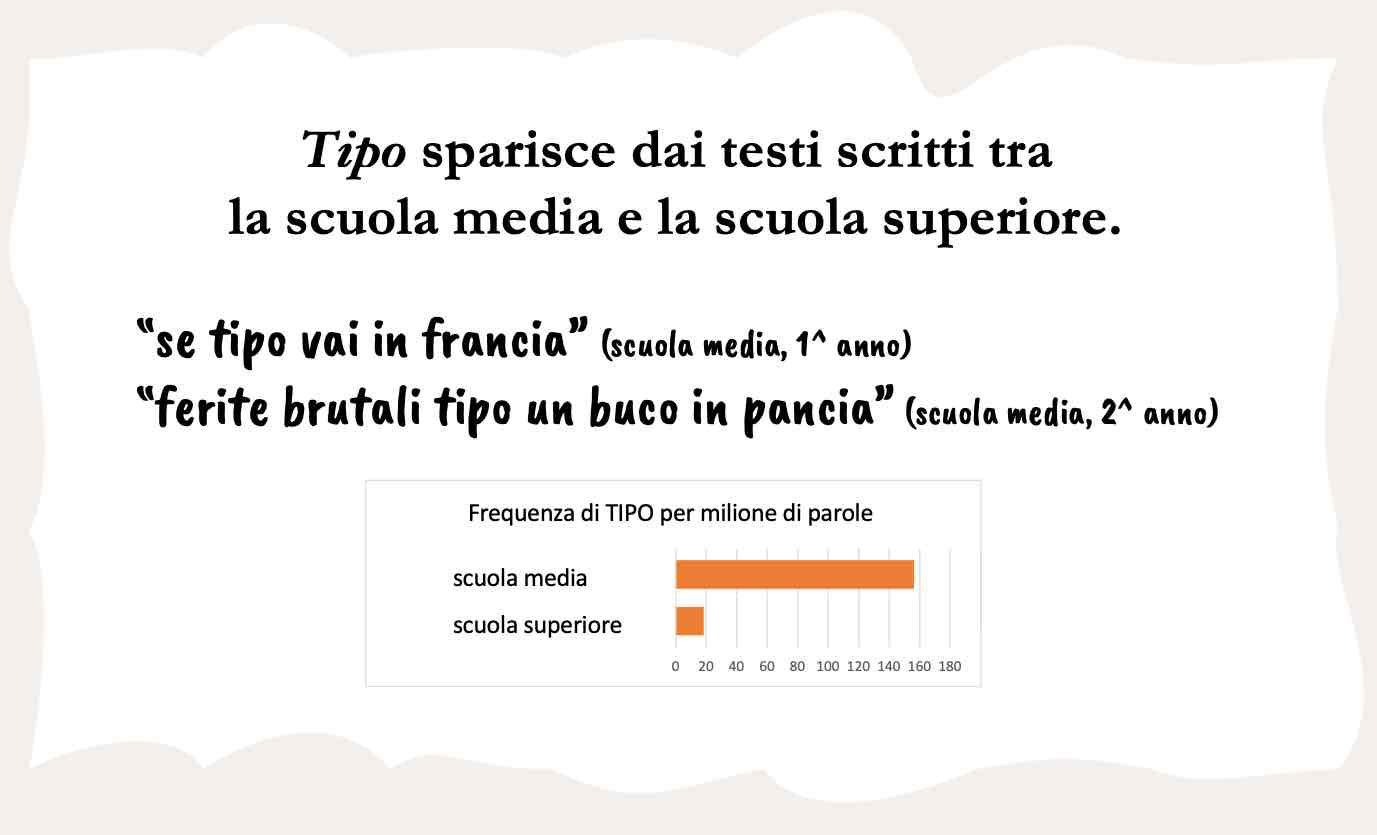
These changes show us that students' communication awareness evolves as they progress through their academic careers.
But why? How does it happen?
Ethnographic data offer a possible explanation
1. Teachers often link oral presentations to the rules associated with written genres.
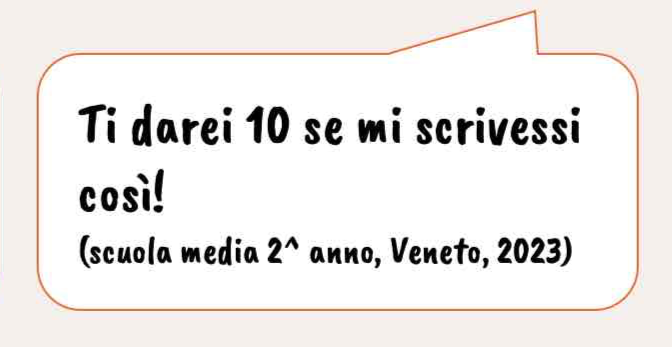
For example, when a student used particularly refined language while speaking, a teacher replied: I would give you a perfect score/grade if you wrote like that!
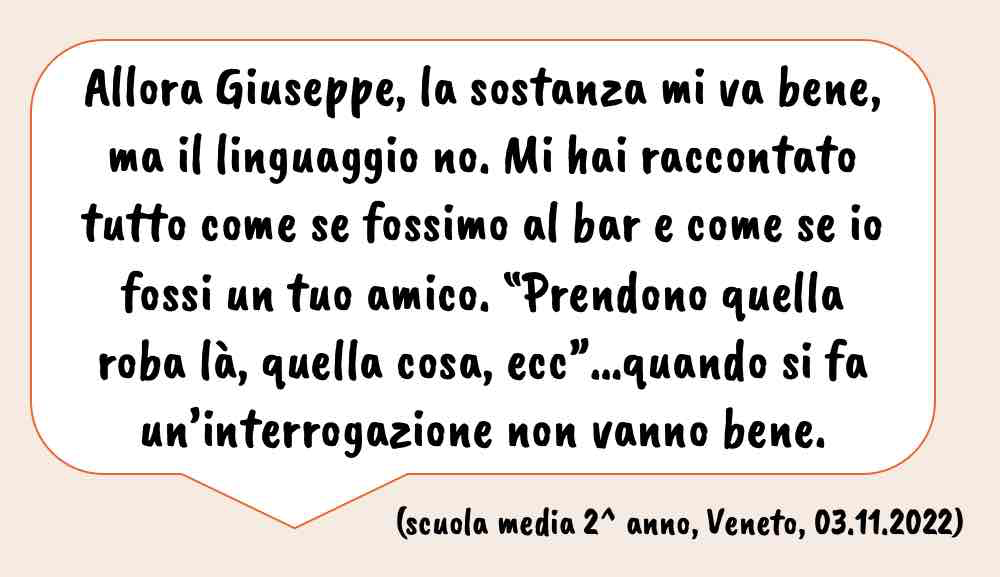
After a history test, the teacher told Giuseppe very clearly what he had done wrong and what he had done right: So Giuseppe, the substance is good, but the language isn’t. You told me everything as if we were friends at the bar: “They took that stuff there, that thing, etc.”…when you do an oral exam that’s not ok.
2. Students learn through trial and error.
3. Teachers set prescriptive rules.
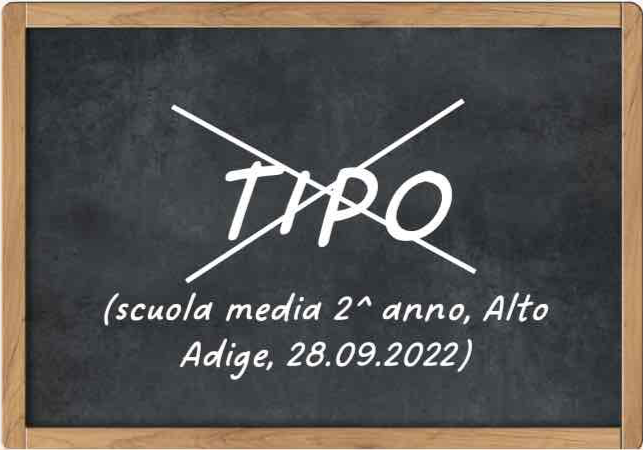
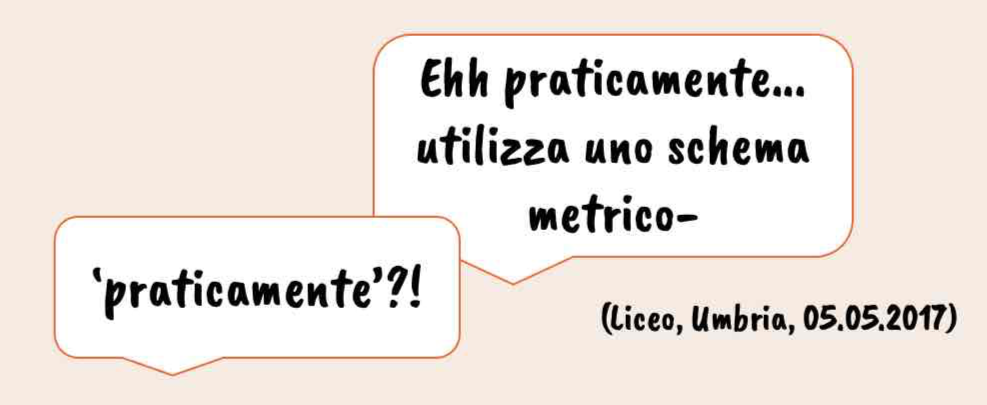
For example, one day in middle school, a teacher declared, “LIKE, is unbearable” and wrote on the board:

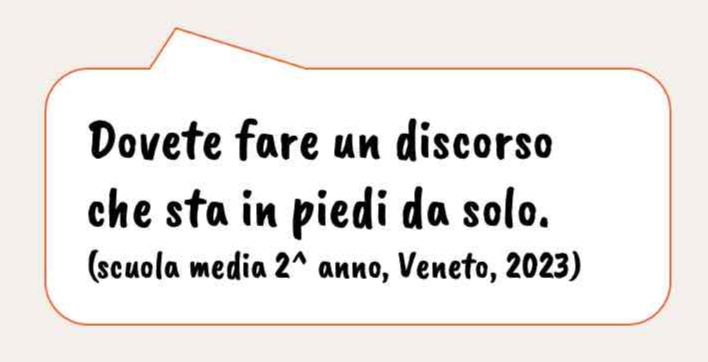
Or when a teacher declared: We don’t say ‘basically’ because it’s a useless adverb.
In high school, however, such lengthy explanations are no longer necessary. A quick reminder from the teacher is all it takes.
When a student starts with “Uh basically…”, the teacher’s mocking repetition of “basically” is enough to remind the student that “basically” is dispreferred.
Sentences using “like” (for example, “if you, like, go to France” or “brutal injuries, like a hole in the stomach”) are much more common in middle school texts than in high school ones.
According to data from LEONIDE and ITACA, the use of the word “tipo” (“like”) in high school essays dropped to just 12% of what it was in middle school.
It has also been noted that high school students not only use a variety of connectives (e.g., such as, furthermore, therefore, for instance) when writing, but also make a significant shift in register during oral exams, specifically choosing more sophisticated connectives.
During this ethnographic project, one student confirmed that she was aware of this shift in register and knew exactly which connecting words to use in oral presentations.
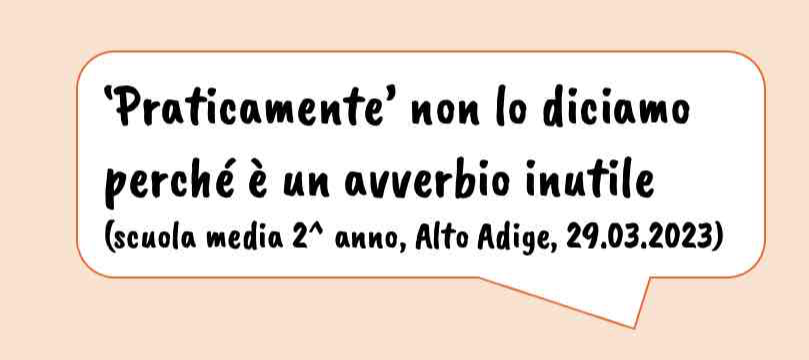
Meanwhile, after heavily co-constructing a student’s oral presentation/exam, the teacher said to the class: You need to make a speech that stands on its own two feet.
These three ways of teaching students not to use certain words (such as “like” and “basically”) may sound familiar to some of us. Perhaps we remember times in our own youth when we were corrected for similar “mistakes.” Perhaps we, in our own classrooms, make comments like these to our students today.
But let’s not forget…
…the role that “like” and
“basically” play in our communicative repertoire.
Rather than gaps in vocabulary, “like” and “basically” are tools that students use for planning their speech while speaking.
Schools often penalize them in an effort to enforce a formal style, but for young people, they are part of a fluid repertoire that evolves while becoming more restricted under the pressure of our expectations.

…that school acts as a social filter.
We need to ask ourselves how schools actively teach students to limit their linguistic resources.
We often teach students to use “proper” language, which is more an exercise in conformity than in actual effectiveness.
Critical awareness should help us understand when and why to change our tone, not to feel ashamed of our natural ways of expressing ourselves.
…to consider communicative competence.
Being competent doesn't mean speaking "well" in an absolute sense, but knowing how to manage the interaction.
Penalizing these markers risks stifling the student’s ability to negotiate meaning during an exam, turning a moment of dialogue or reasoning into a rigid performance.
…that standard Italian
is a unicorn.
We aim for an “academic language” that’s like a unicorn: we all have a vague idea of how it sounds (no “like,” no hesitations, serious), but no one actually speaks it in real life.
We impose on students an idealized, abstract model that we ourselves do not use in everyday life, creating a disconnect between the living language and the performative language used for exams.

-
Leone-Pizzighella, A. R., Bienati, A., & Frey, J.-C. (2024). Discourse markers in the curricularization of academic language: A mixed methods analysis of tipo and praticamente in Italian secondary schools. In L. Cirillo & R. Nodari (Eds.), Contesti, pratiche e risorse della comunicazione multimodale (Vol. 18). Officina Ventuno. http://www.aitla.it/images/pdf/StudiAItLA18/009_Leone-Pizzighella_et_al.pdf
see also:
Bunch, G. C. (2014). The Language of Ideas and the Language of Display: Reconceptualizing “Academic Language” in Linguistically Diverse Classrooms. International Multilingual Research Journal, 8(1), 70–86. https://doi.org/10.1080/19313152.2014.852431