Activity: Language pies
Let’s discover how much variety is in our repertoire (even if we only speak one language).
This activity is carried out individually (i.e., each student has their own 'pie'). It can also be used as a supplementary activity to the teaching activity "How do we communicate?"
This activity can be downloaded here, but it can also be done with a simple circle drawn in a notebook.
How to do it:
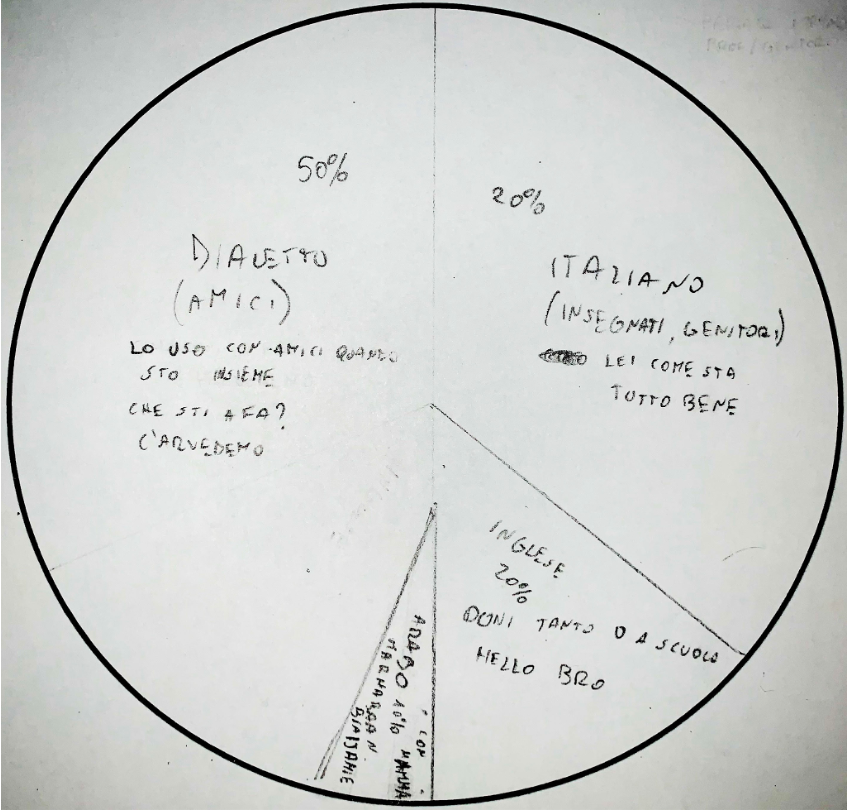
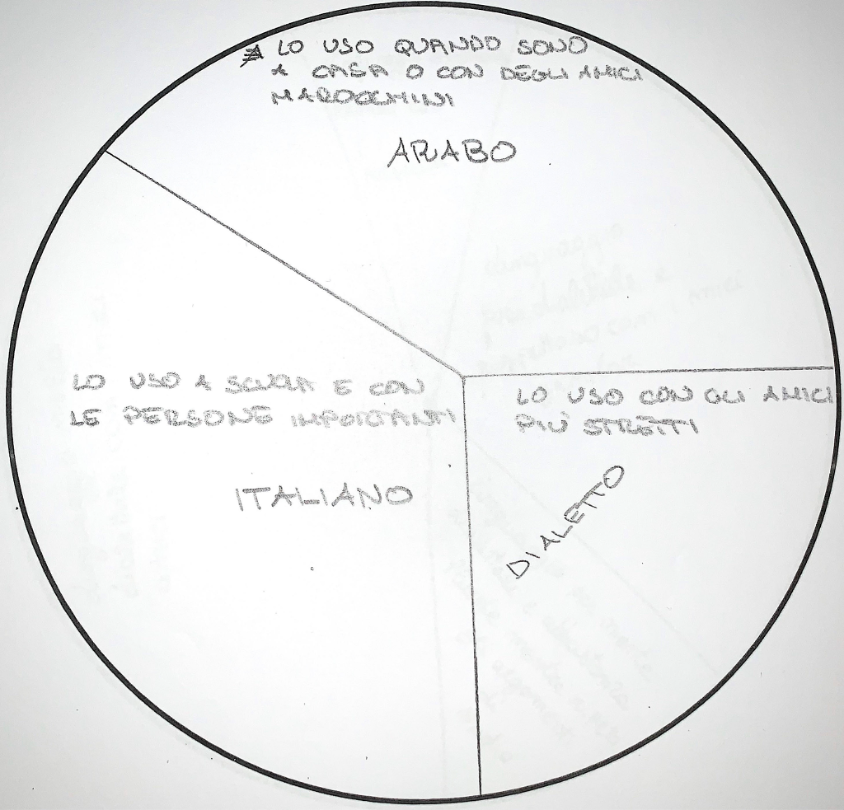
Students should transform the circle into a pie chart representing all the different ways they communicate in a typical day. (Or in any other time frame. For example, a girl who spends every summer in Sri Lanka might want to treat the circle as a calendar year. Thus, her pie chart will also include the three months when she speaks much more often in Tamil or Sinhalese with her relatives.)
Not all of these ways of speaking will have a name, but students are encouraged to give examples of each way of speaking or communicating. They are also encouraged to say with whom or in what circumstances these ways of communicating are used.
Note: It is important to encourage students to divide the circle into as many segments as possible to increase their awareness of the ways in which they communicate. Sometimes, it is helpful to ask them questions such as:
Do you talk to your teacher the same way you talk to your siblings or cousins?
Do you talk to your grandparents the same way you talk to your friends?
Do you speak to all your peers in the same way?
Do you write to your friends in the same way you write essays?
These (rhetorical) questions can help students understand the purpose of the exercise without the teacher having to mention specific languages or linguistic varieties.
Here are three examples of language pies
made by Italian high school students.