Activity: How do we communicate?
Discover multilingualism and multimodality in daily life.
Warm-up
Ask students:
Do you consider yourself bilingual/multilingual? Why or why not?
Do they consider themselves more or less capable than their parents or teachers in some form of communication? Which ones, and why?
Pre-activity
Divide the class into 4 groups (preferably with students in each group who do not have exactly the same linguistic background). They share their answers to the above questions with each other (which prepares them for the next activity).
During this sharing among small groups, the teacher hangs a large sheet of paper in each corner of the classroom with a task written at the top:
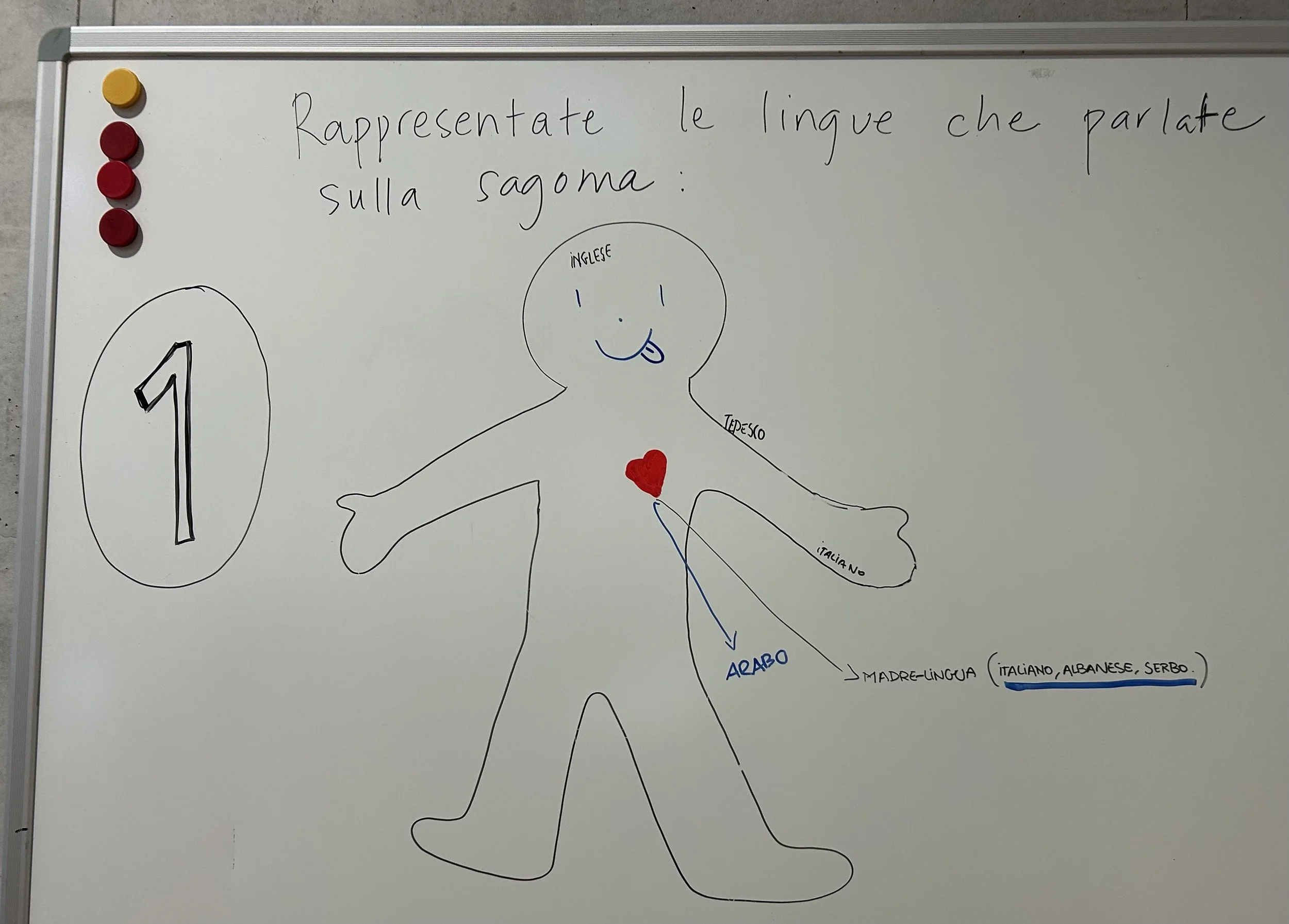
Represent the languages you speak on the template(symbolic task —> focused on the value of/emotional connection to the different languages that students use)
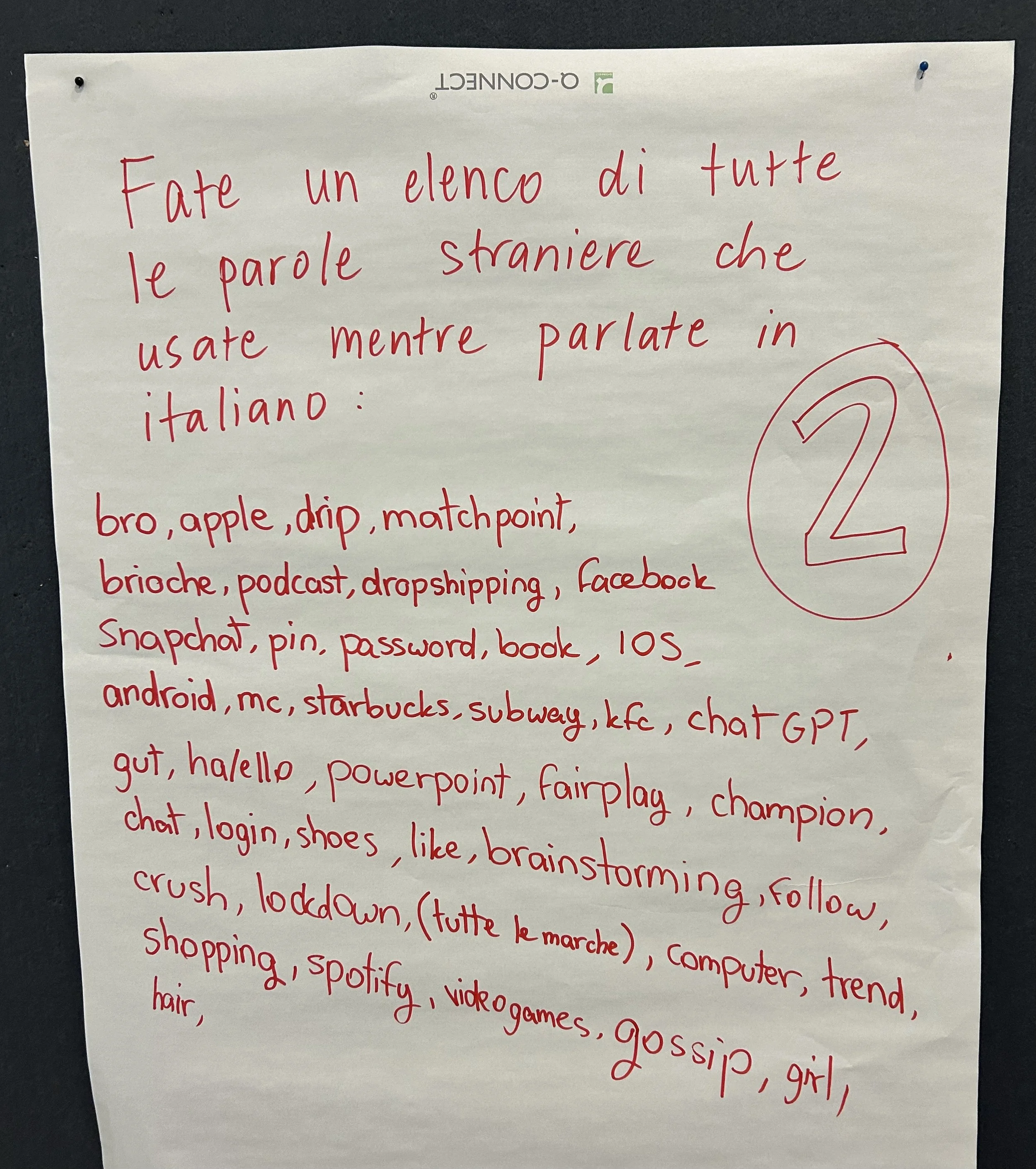
Make a list of all the foreign words you use when speaking Italian(reflective task —> aimed at discovering how languages intertwine)
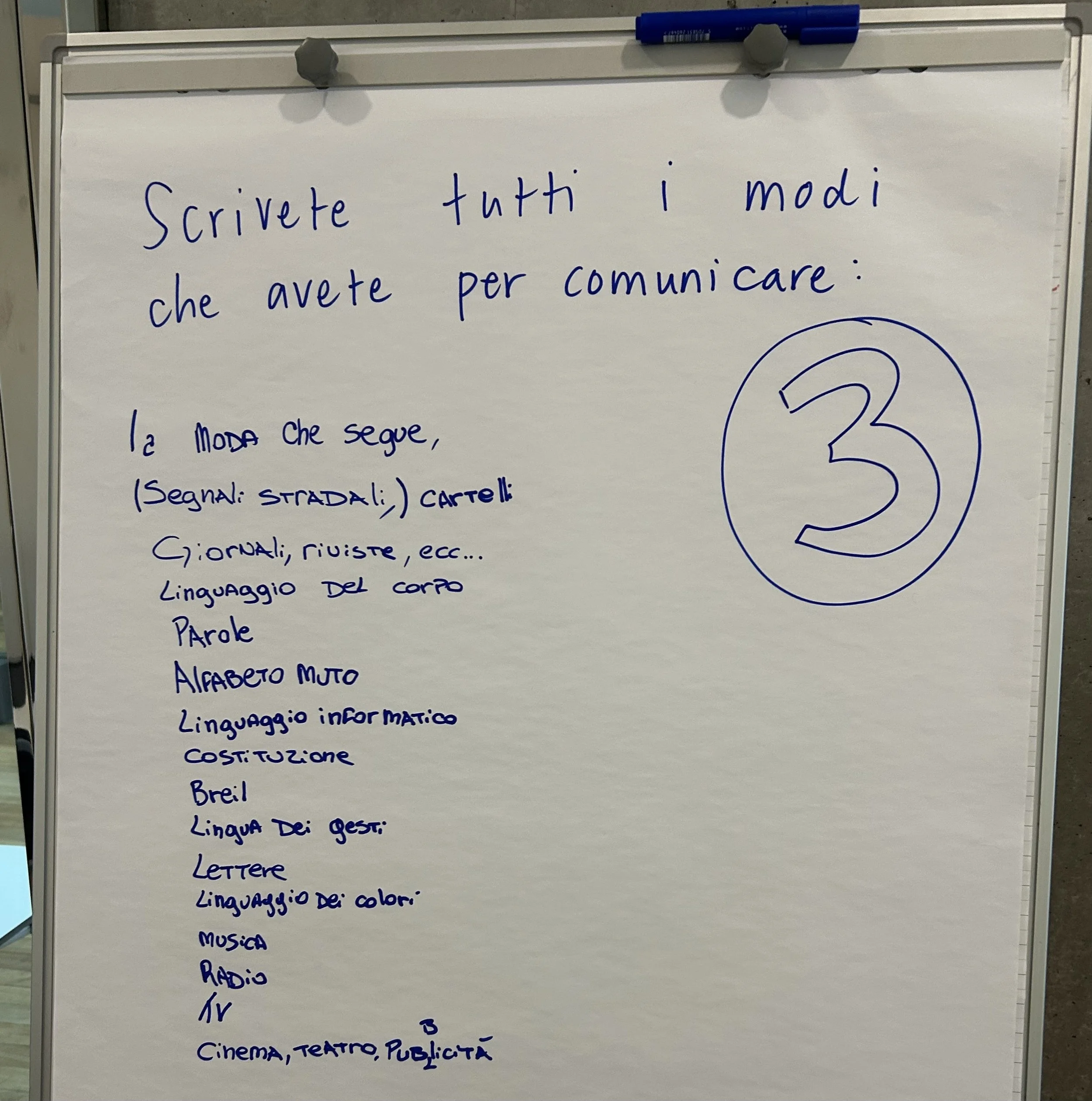
Write down all the ways you communicate(holistic task —> aimed at discovering all the ways in which we communicate)
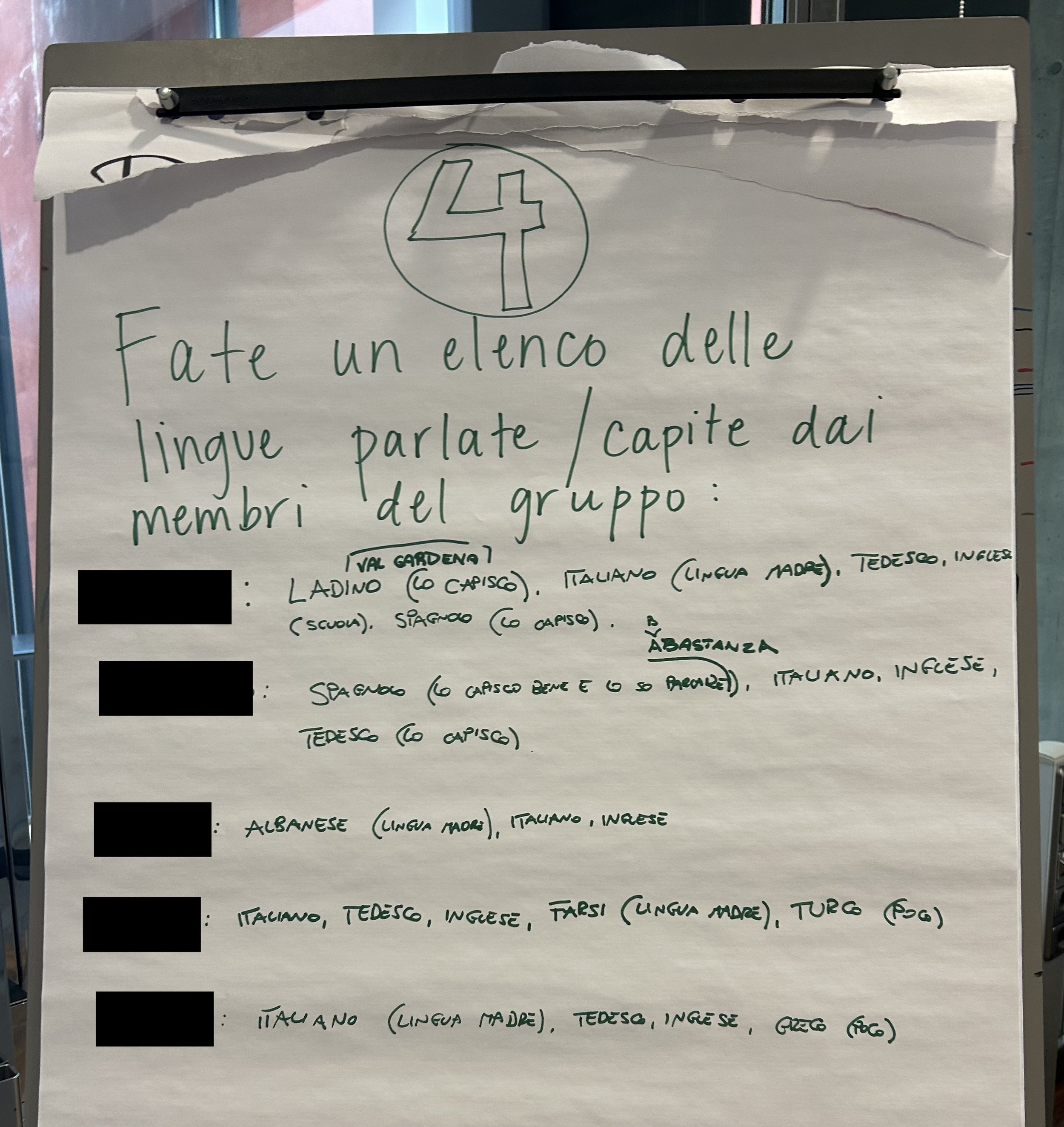
Make a list of the languages spoken/understood by the group members(collective task —> aimed at discovering the linguistic resources not only of the individual but of the group)
Activities
Each group is assigned a task (one of the four posters). They must complete the task together. At the end of the activity, they present their work to the class.
Post-activity
At the end of the work and presentations, students take a "gallery walk" (5 minutes) among the posters and add their reactions (e.g., with post-it notes).
Assignments/independent work:
Once back at their seats (or at home), they can explore one of the four tasks in greater depth.
Here are some examples of this activity done in Italian with students in South Tyrol in 2025.